
“They called it the 'Ship of Dreams'… and it was. It really was.”
— Rose DeWitt Bukater, Titanic (1997)
For generations, the American Dream has inspired people across the world to leave behind the familiar in search of opportunity, hope, and a better life. Many Americans today can trace their own family histories back to ancestors who packed their belongings, boarded ships, and crossed the ocean with dreams of building something new.
In April 1912, more than 100 passengers aboard Titanic were traveling toward that very dream.
Some were wealthy businessmen and entrepreneurs. Others were farmers, laborers, mothers, and children searching for stability and opportunity. Whether they traveled in first class or third class, each passenger carried personal hopes for the future — hopes that reflected the enduring spirit of America itself.
As the United States celebrates its 250th anniversary this July, the stories of Titanic’s passengers remind us that the American Dream has always belonged to people from every walk of life.
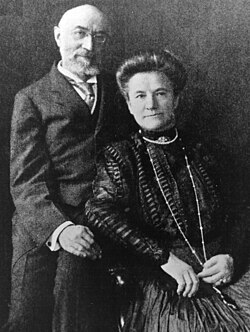 Isidor Straus: From Immigrant Child to American Success Story
First Class passenger Isidor Straus is remembered today as the co-owner of Macy’s Department Store and for the enduring love story he shared with his wife, Ida Straus. But his journey toward success began with humble beginnings.
Born in Germany, then part of the Kingdom of Bavaria, Isidor was the eldest of five children. His father, Lazarus Straus, worked as a grain farmer before hearing of greater opportunities in America. Determined to build a better future for his family, Lazarus emigrated first and settled in Georgia. Two years later, Isidor and the rest of the Straus family joined him in the United States.
Lazarus initially worked as a peddler before earning enough money to open his own store. After the Civil War — and facing some hostility for opposing slavery — he relocated to New York, recognizing that new opportunities awaited there. His family would soon follow.
In New York City, Isidor and his father founded the glassware and tableware company L. Straus & Sons. Their business operated inside Rowland Macy’s department store beginning in 1873. Following Macy’s death, the Straus family gradually acquired ownership shares until the store ultimately became theirs.
After Lazarus Straus passed away, Isidor and his brother Nathan took over leadership of Macy’s, helping transform it into one of America’s most recognizable retail institutions.
Yet Isidor’s contributions extended beyond business. From 1894 to 1895, he served as a representative for New York’s 15th Congressional District, further cementing his place in American history.
From immigrant beginnings to business success and public service, Isidor Straus embodied the promise of the American Dream.
The Herman Family: Starting Over in America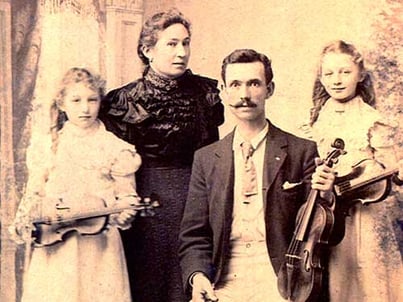
Second-class passengers Samuel and Jane Herman were already living a comfortable life in Castle Cary, England. Samuel worked as a farmer and operated the Britannia Hotel, while the couple raised their twin daughters, Kate and Alice, alongside George Sweet, a longtime employee who had become part of the family.
Despite their stability, financial difficulties led the Hermans to make a life-changing decision: emigrate to America. Jane’s brother had already settled in New Jersey, offering the family hope for a fresh start and new opportunities.
The Hermans boarded Titanic in Southampton as second-class passengers, ready to begin their new lives across the Atlantic.
When tragedy struck on the night of April 14, 1912, Samuel Herman and George Sweet made certain the women in their group safely boarded a lifeboat. Both men perished in the disaster.
Jane, Kate, and Alice survived and eventually reached New Jersey. Although Jane originally intended to return to England after losing her husband, she ultimately remained in America for the rest of her life, finding work and establishing a new home there.
Kate later married Walter Parsons and moved to Portland, Oregon, where they raised a family together. In 1952, she officially became a naturalized citizen of the United States.
Alice also built her life in New Jersey, marrying William Cleland, a horse trainer who had helped greet the Hermans after the sinking. Together, they operated stables and built a future in the country her family had once dreamed of reaching.
Though tragedy forever changed their journey, the Herman family’s story is one of resilience, perseverance, and rebuilding in America.
 The Peacock Family: A Dream Interrupted
Third-class passenger Edith Peacock boarded Titanic with her two children, Treasteall and Albert, bound for Newark, New Jersey.
Waiting for them there was Edith’s husband, Benjamin Peacock, who had emigrated to America the previous year in search of work and opportunity. Like so many immigrants before him, Benjamin hoped to establish himself first before bringing over the family he loved.
Benjamin had never even met his young son. Edith had still been expecting the baby when Benjamin left England in 1911.
Excited for his family’s arrival, Benjamin carefully saved money to send home for their tickets aboard Titanic. He purchased toys for his daughter and even bought a new baby carriage for the son he had yet to hold in his arms.
But the reunion never came.
On the night Titanic sank, Edith Peacock and both children were lost.
After hearing news of the disaster, Benjamin traveled to New York hoping for answers — or perhaps even a miracle. Instead, he learned that his wife and children had perished in the tragedy.
The Peacock family’s story reflects both the hope and heartbreak tied to immigration during the early 20th century. Their dreams of building a new life in America were shared by countless others aboard Titanic.
The Legacy of the American Dream
More than a century later, Titanic continues to resonate because her passengers were more than names on a manifest. They were dreamers, workers, parents, entrepreneurs, and immigrants — people searching for possibility.
As America marks 250 years of independence, these stories remind us that the nation has long been shaped by those willing to risk everything for a chance at a better future.
For many aboard Titanic, America represented hope.
And for some, that dream lived on.
Dreams Worth Writing Down
More than a century later, the stories of Titanic’s passengers continue to inspire us because their dreams still feel familiar. They hoped for opportunity, security, love, and a brighter future in America.
This summer, as the nation celebrates 250 years of history, we invite you to reflect on your own journey and the dreams that guide it. Our Titanic Museum Attraction stationery collection is inspired by the timeless tradition of letters, journals, and handwritten memories — because every dream deserves to be written down.

Titanic Green Feather Quill and Wax Seal Calligraphy Set
$39.99This feather quill, pen, and wax seal set is the perfect gift for stationery lovers looking to add a formal flair to their writing experience.

Leather Wrap Titanic Journal
$19.99This rustic Titanic Brown Leather Wrap Journal is a wonderful solution to all your journaling needs.

Red Feather Quill Calligraphy Pen
$18.99This faux feather pen with real ink will be a delightfully eccentric addition to your stationery set.